
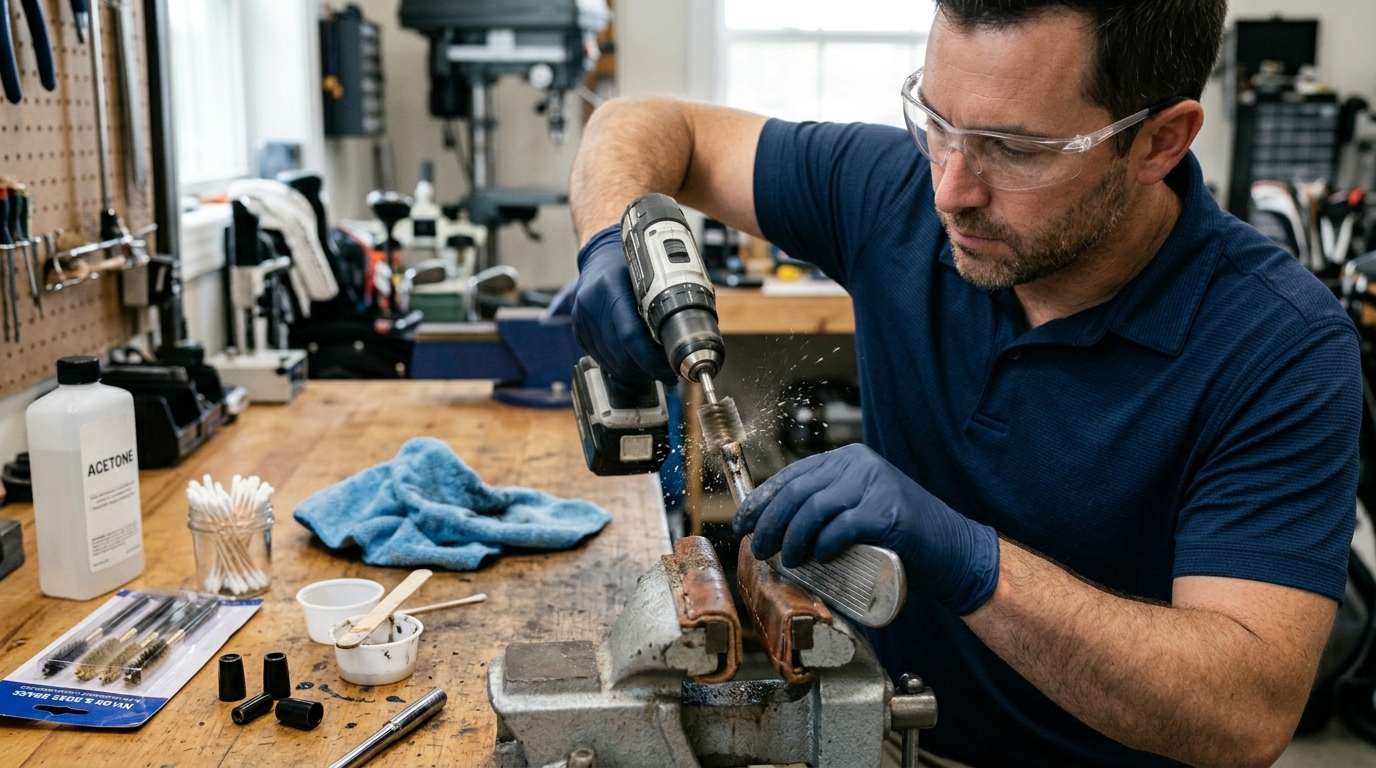
How to prep a golf club hosel for new epoxy is one of the most important skills in DIY club repair because the shaft bond is only as strong as the surfaces you prepare. Fresh epoxy cannot create a reliable bond if the hosel still has old epoxy, dust, oil, sanding residue, or loose debris […]
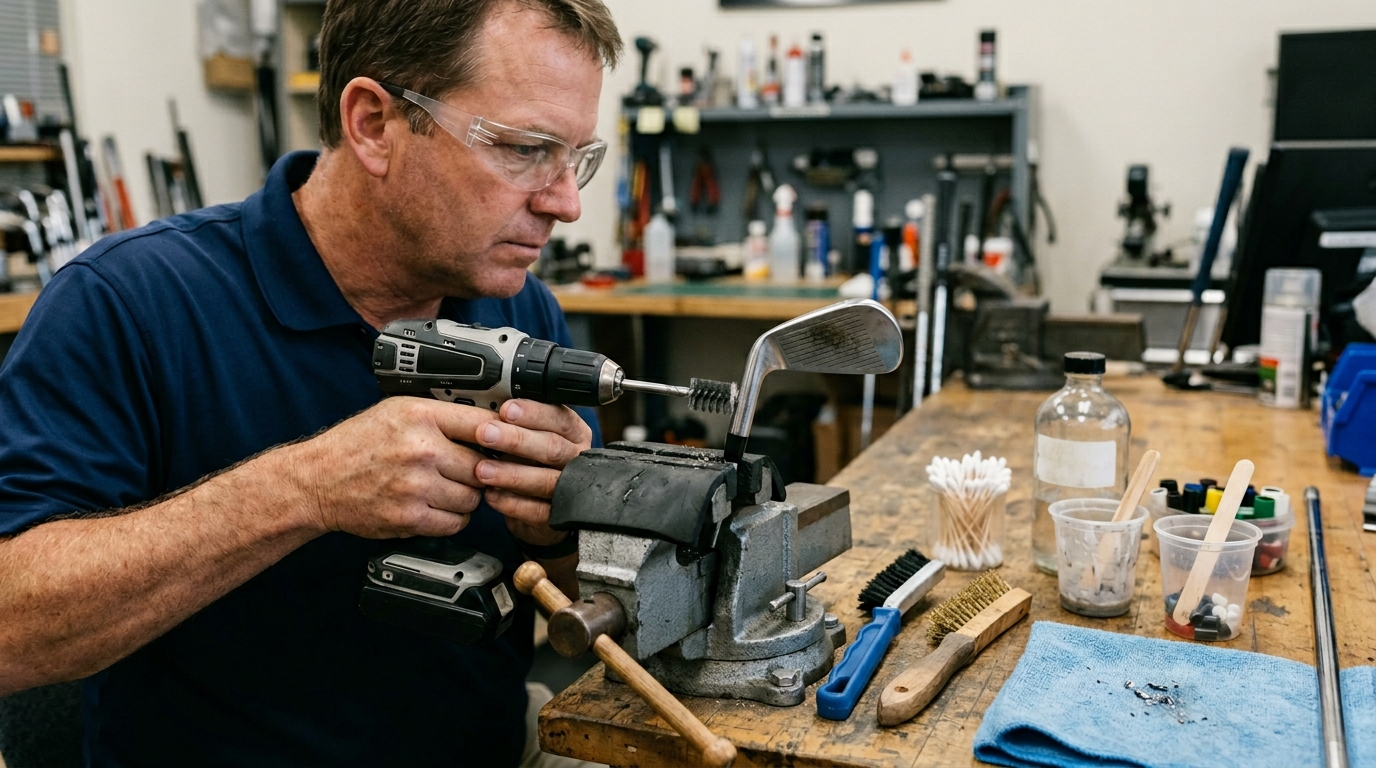
Hosel cleaning brush drill bit tools are one of the easiest ways to clean old epoxy, dirt, sanding dust, and debris out of a golf club hosel before installing a new shaft. A clean bore gives fresh epoxy a better surface to grip, while a dirty hosel can create weak bonding, poor shaft seating, rattles, […]
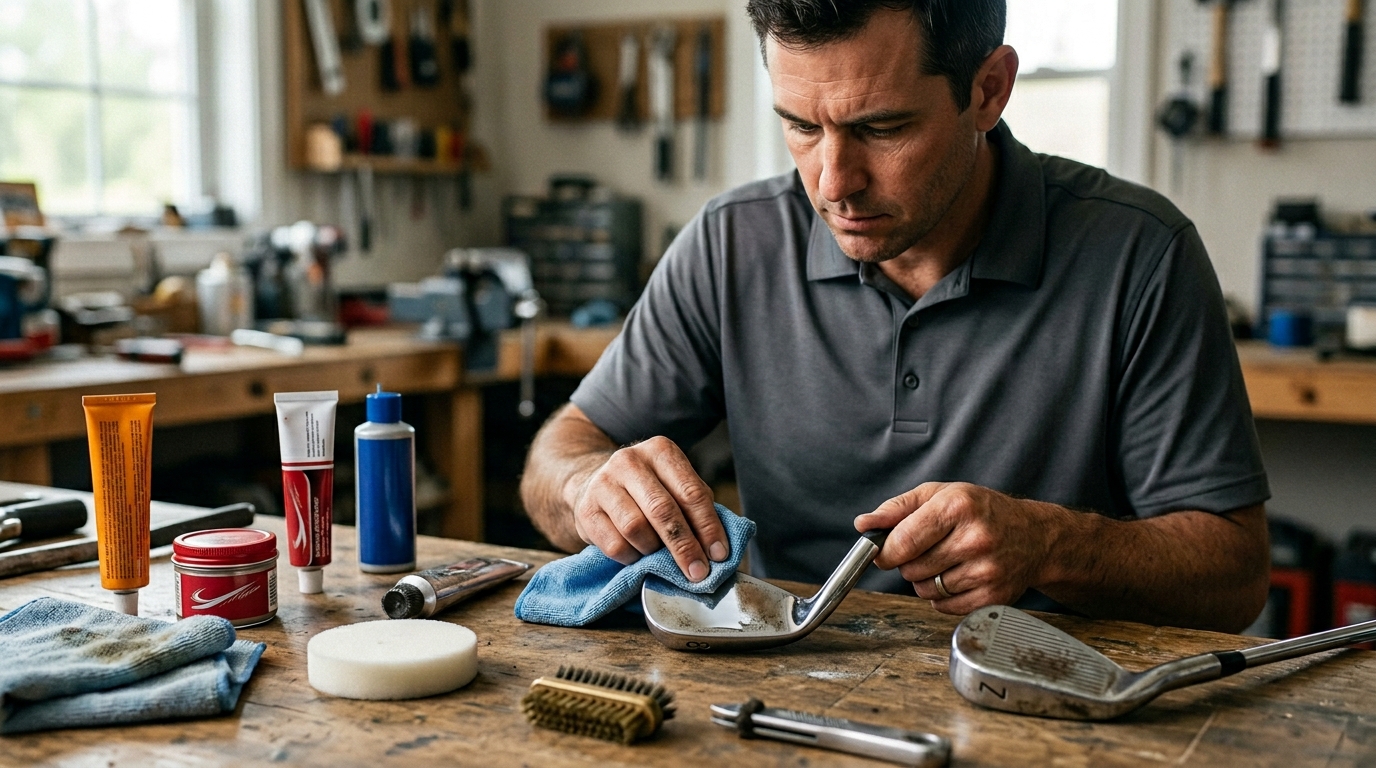
Does polish protect metal for golf clubs? Yes, some metal polishes can help protect golf club heads by leaving a thin protective residue, wax, oil, or polymer-style film on safe metal surfaces. That barrier can slow moisture contact, reduce light oxidation, and make old irons easier to wipe clean after a round. Polish is not […]
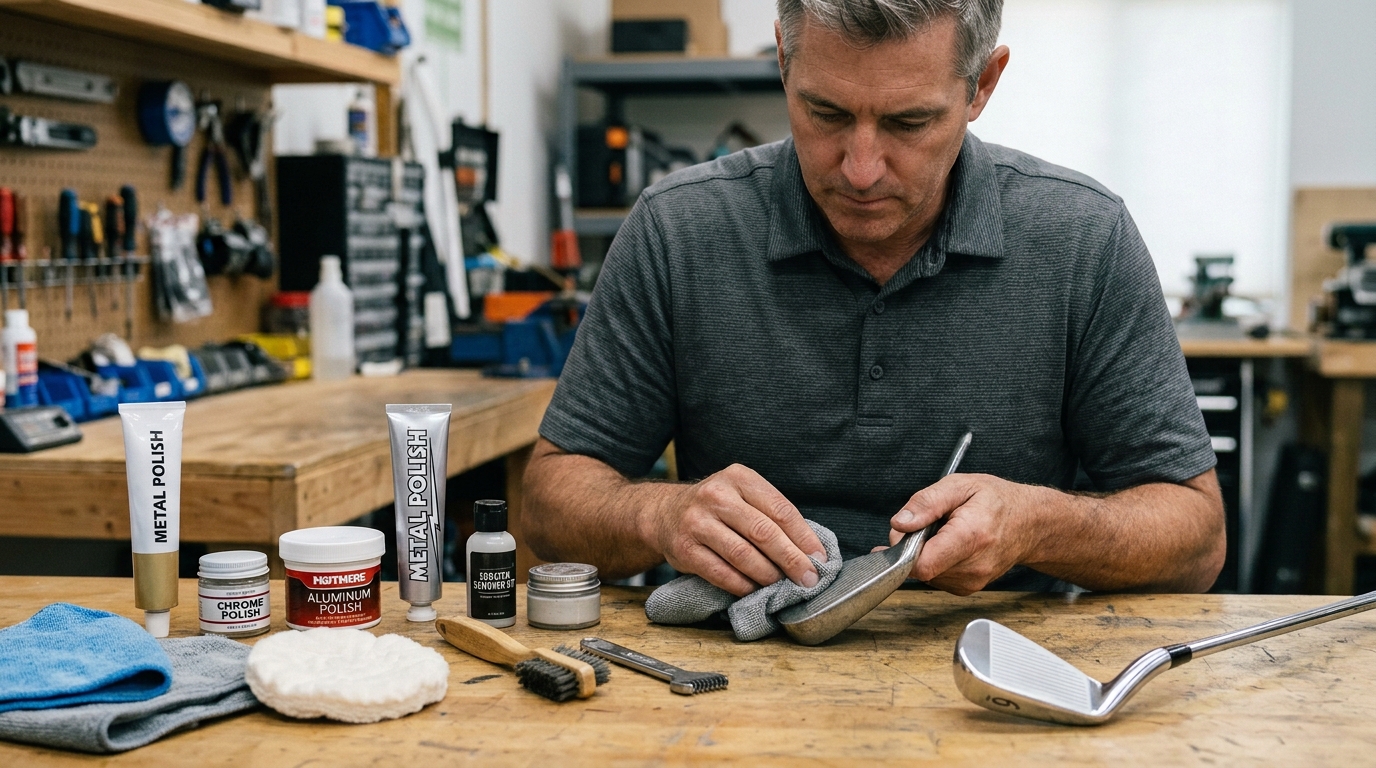
Autosol metal polish golf clubs is a popular restoration search because many golfers want to make old irons look cleaner, brighter, and less tired without sending them out for professional refinishing. Autosol is often mentioned in club-restoration conversations because it can remove light oxidation, dullness, and surface haze while leaving a strong shine on safe […]
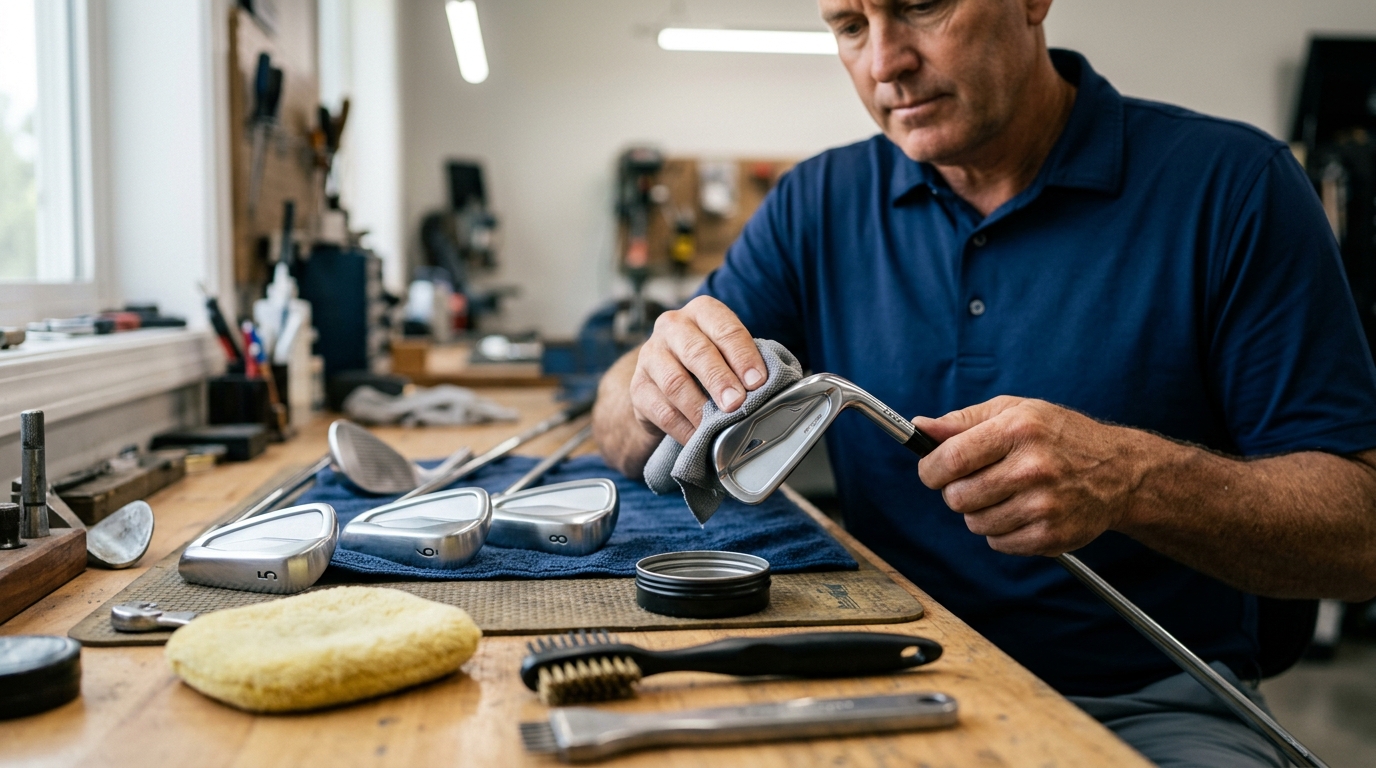
Can you use metal polish on golf clubs? Yes, but only on the right parts of the right clubs. Metal polish can safely improve shine on many stainless steel irons, forged carbon steel irons, chrome soles, and non-impact cosmetic areas, but it can also damage plated finishes, black coatings, paint fill, badges, raw finishes, and […]
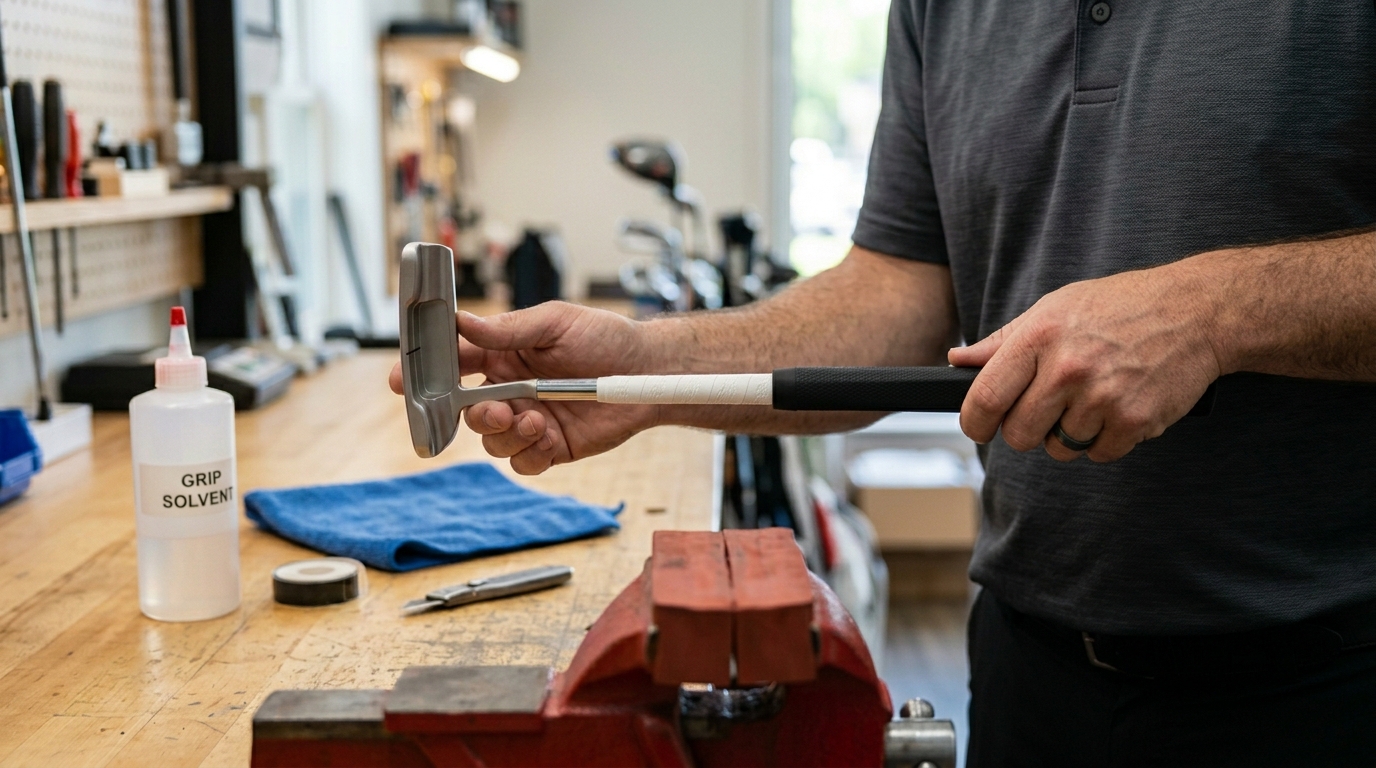
How to use build up tape on golf grip is one of the easiest ways to create a custom reduced-taper feel without buying specialty grips. Instead of building the whole grip evenly, you add more tape under the lower hand so the bottom half feels fuller and less tapered. This technique is popular because many […]
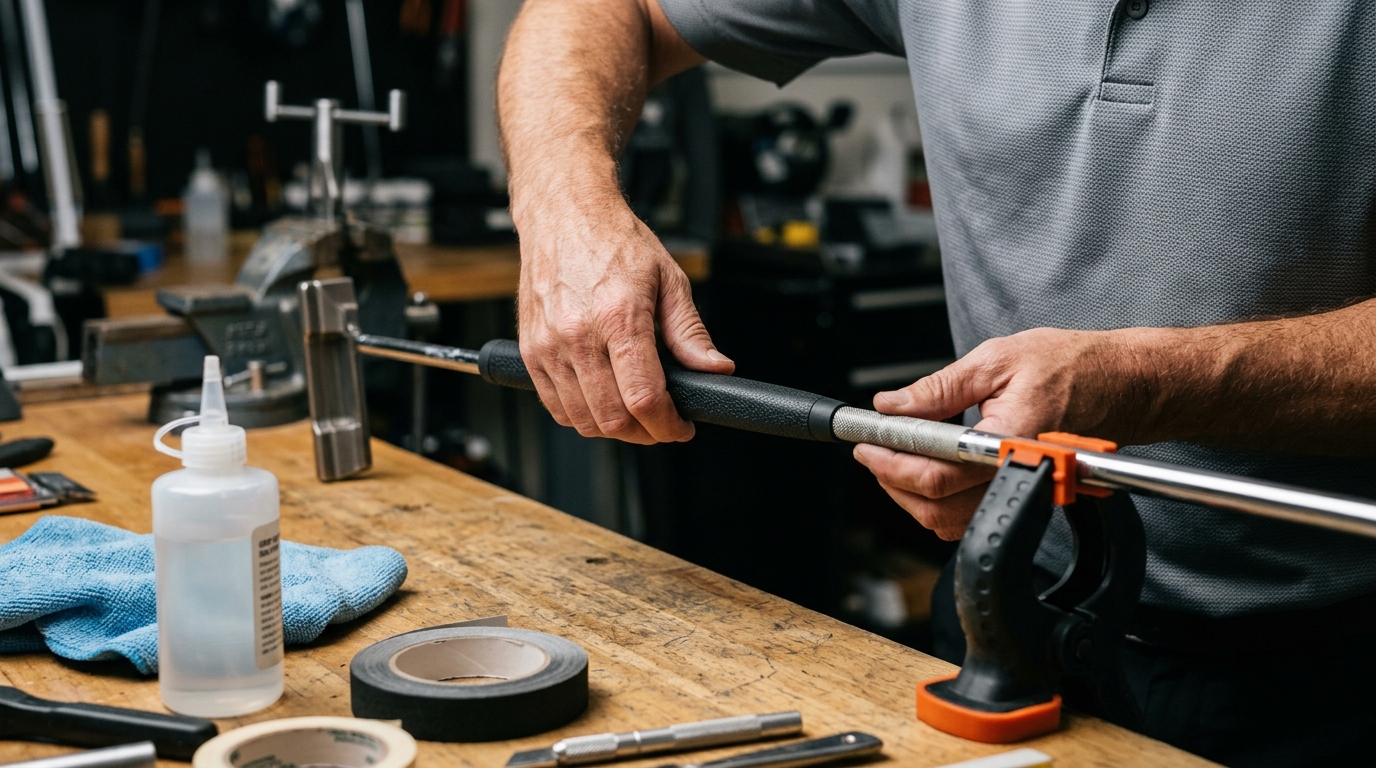
Golf grip build up tape chart questions usually come from golfers who know their standard grips feel too small, but they are not sure whether they need one extra wrap, midsize grips, jumbo grips, or a reduced-taper setup under the lower hand. Build-up tape is one of the simplest ways to fine-tune grip size without […]
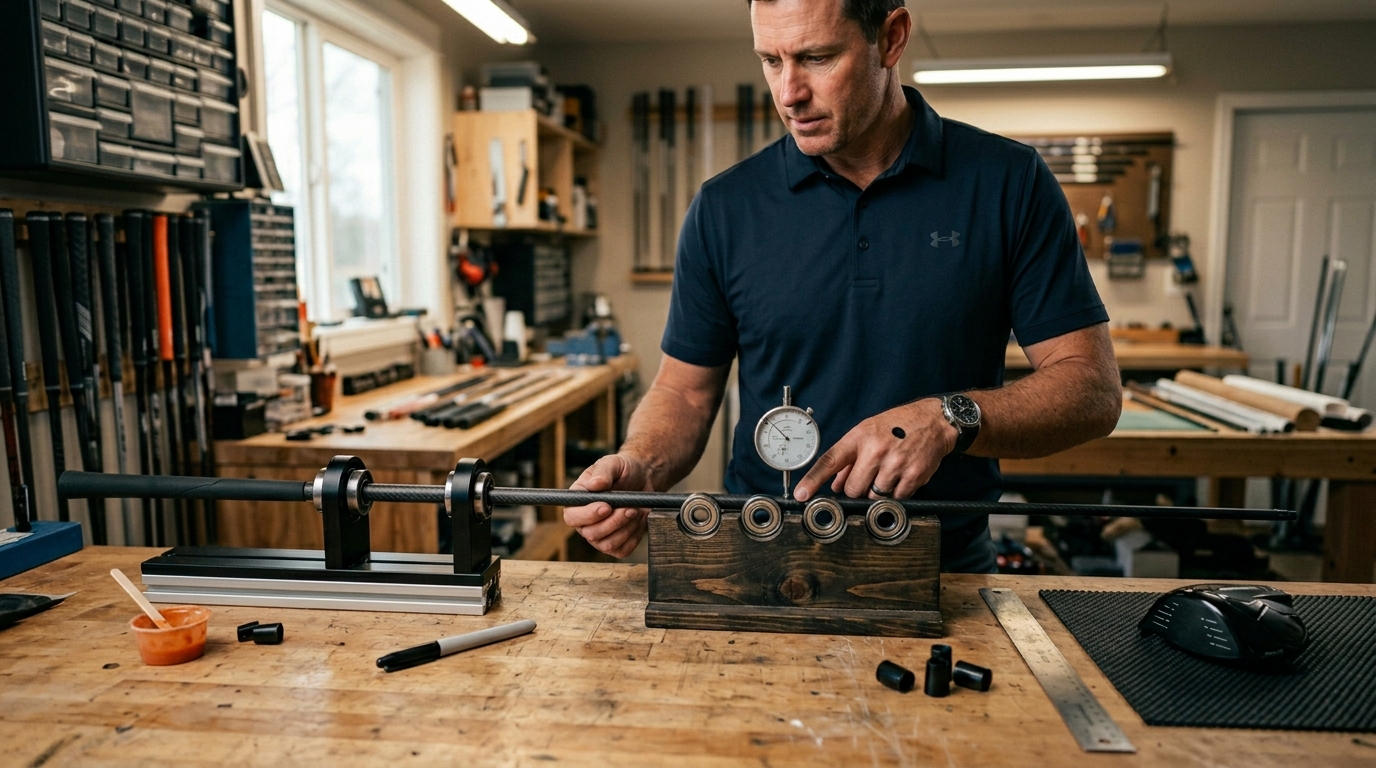
Golf mechanix manual shaft spine finder searches usually come from serious DIY club builders who have already moved beyond basic regripping, ferrules, epoxy, and shaft trimming. They want to know whether a professional spine finder is worth buying, or whether a homemade bearing tool is good enough. The short answer is that a DIY spine […]
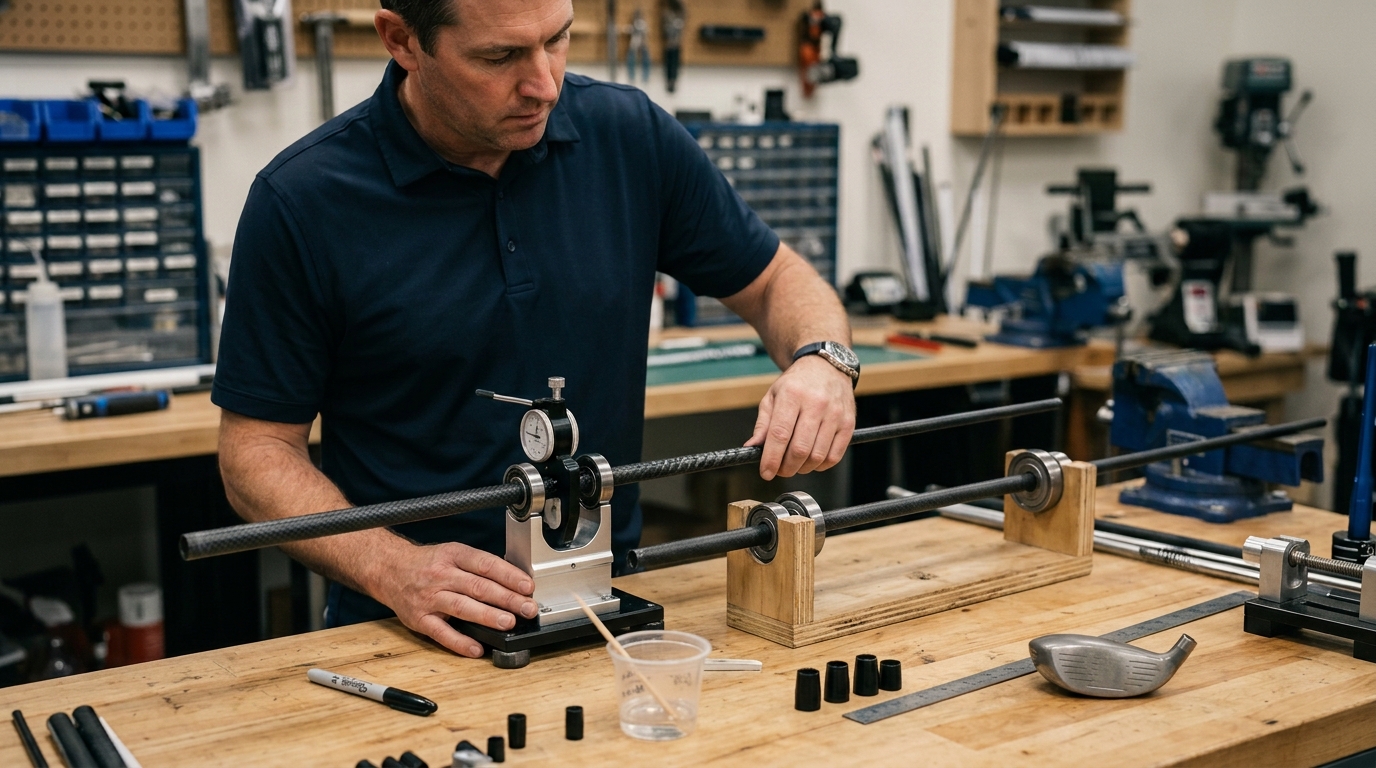
How to find the spine on a graphite golf shaft is one of the most technical questions in DIY club building because graphite shafts are not always perfectly uniform around the entire tube. Even a high-quality shaft can have a slightly stiffer plane, softer plane, wall-thickness variation, or manufacturing seam effect. That small inconsistency is […]
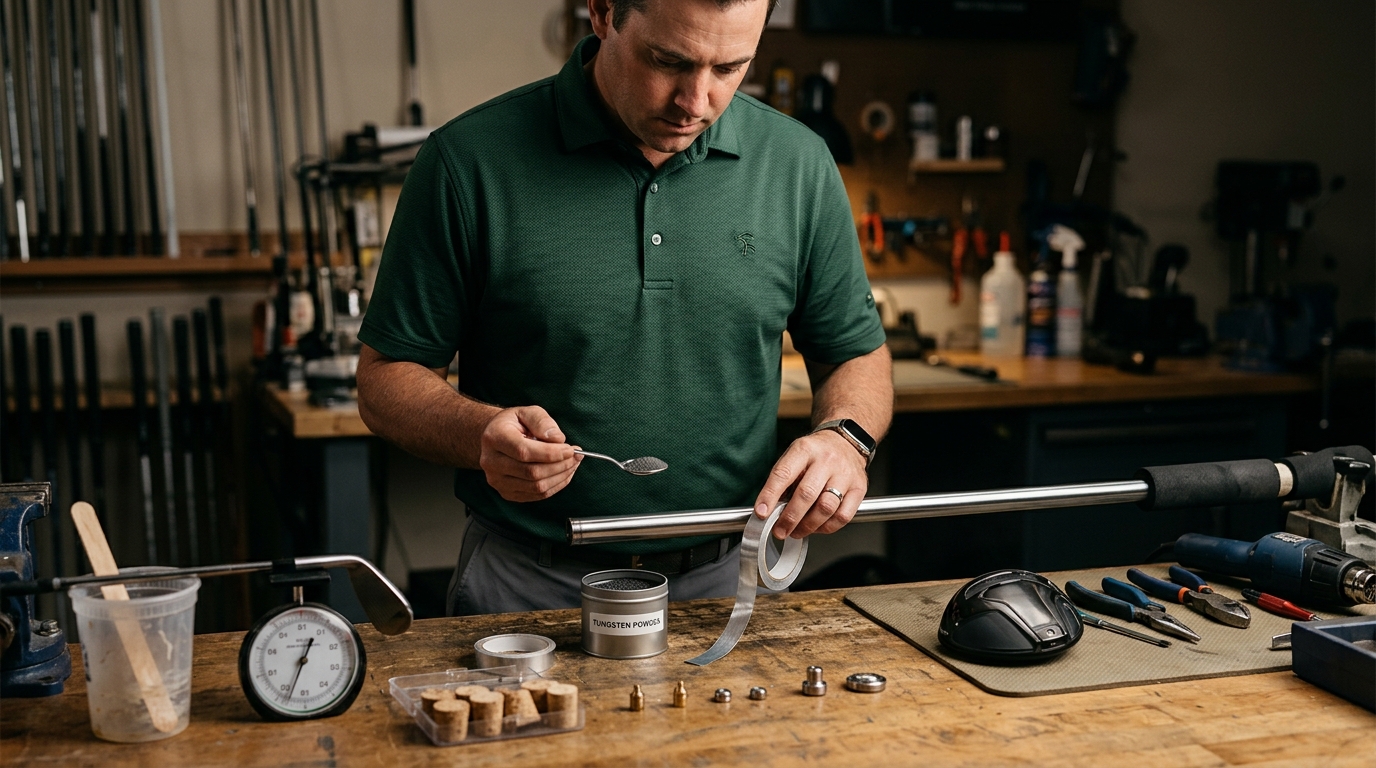
Diy golf shaft spine finder projects are popular because a professional spine finder can be expensive, while a simple bearing-based version can be built with basic hardware, a wooden base, and a few sealed ball bearings. The idea is simple: a golf shaft is not always perfectly uniform around its full circumference. When you support […]