
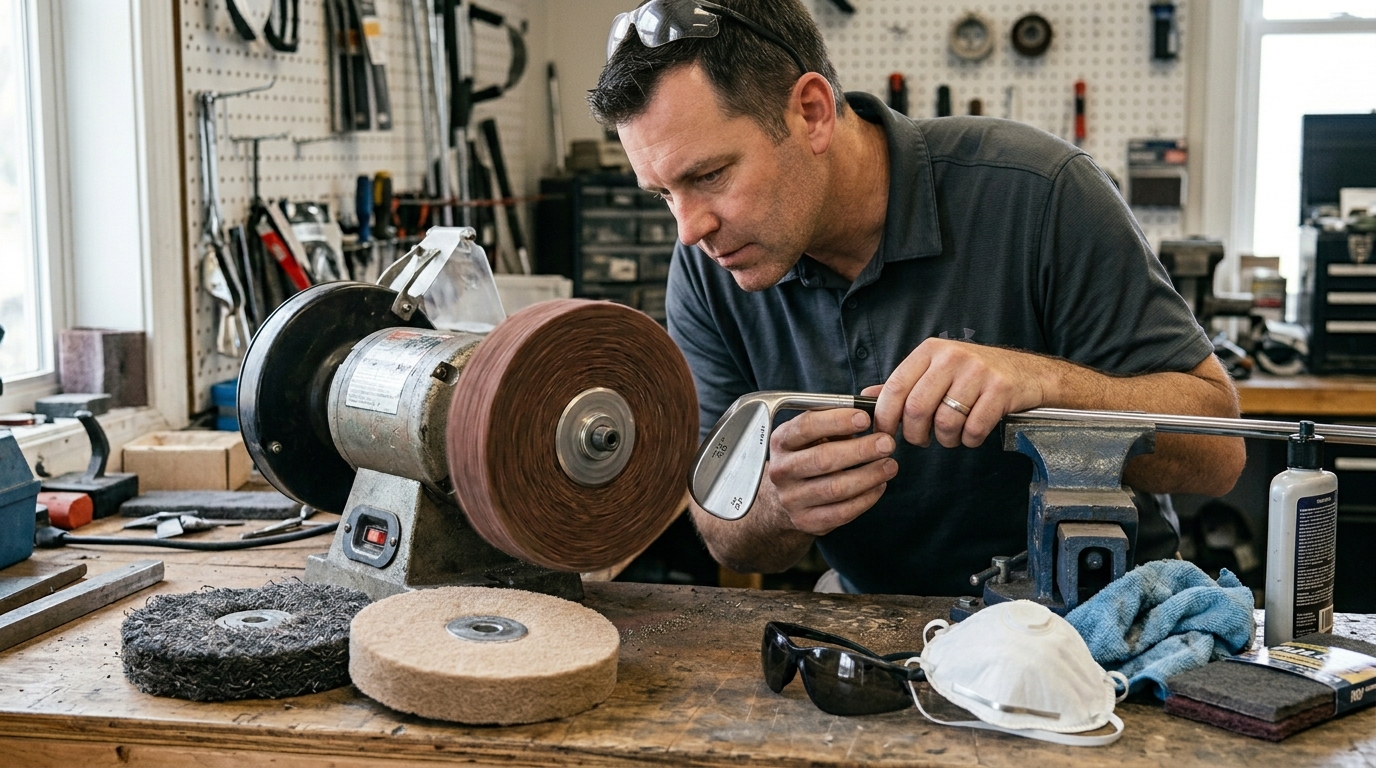
Deburring wheel setup matters because the same abrasive wheel can either create a clean professional finish or ruin a golf club if it spins too fast, grabs the head, overheats the metal, or removes more material than intended. A full-size deburring wheel is usually mounted on a bench grinder, bench buffer, or dedicated finishing motor, […]
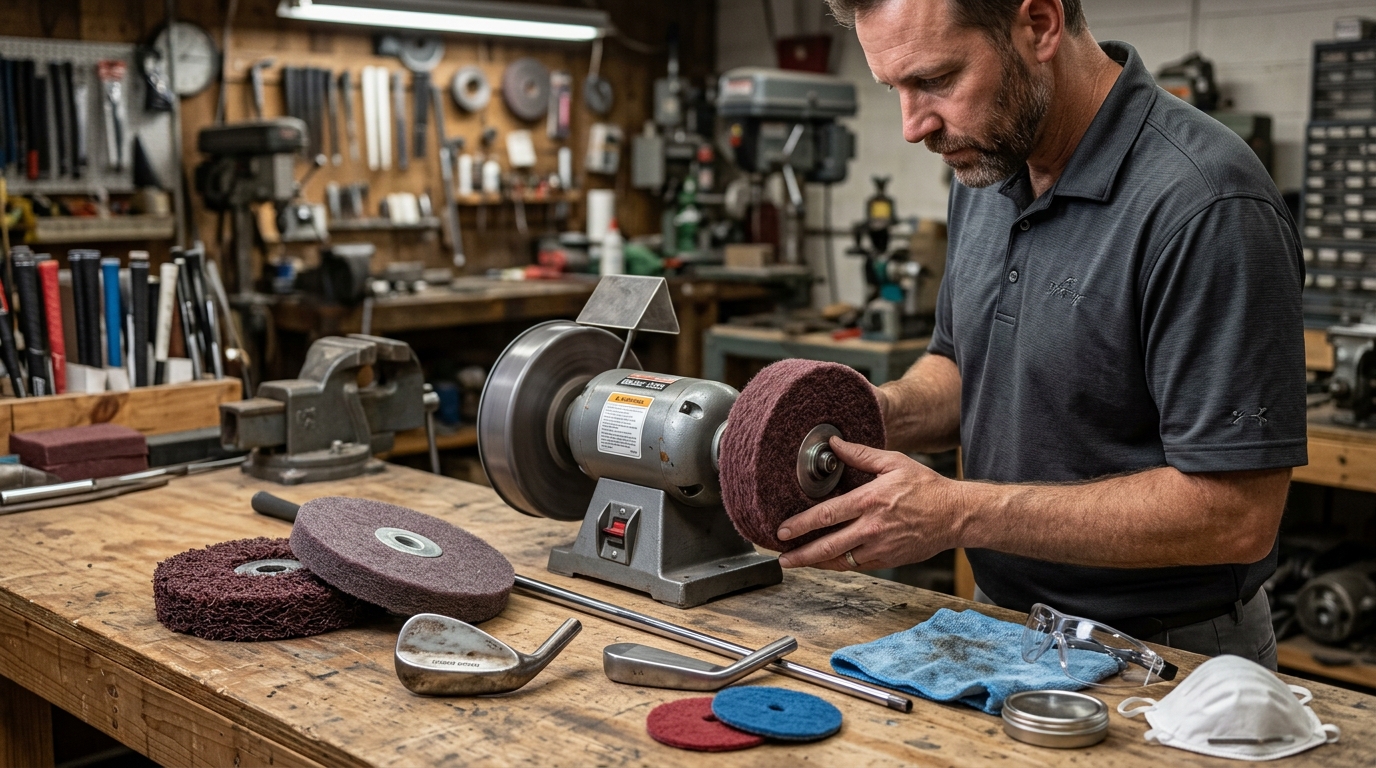
How to remove epoxy from golf club heads safely starts with one rule: heat the hosel enough to soften the epoxy bond, but not so much that you burn paint fill, discolor the clubhead, melt the ferrule, or damage a graphite shaft. Golf club epoxy is a thermoset adhesive, which means it does not simply […]
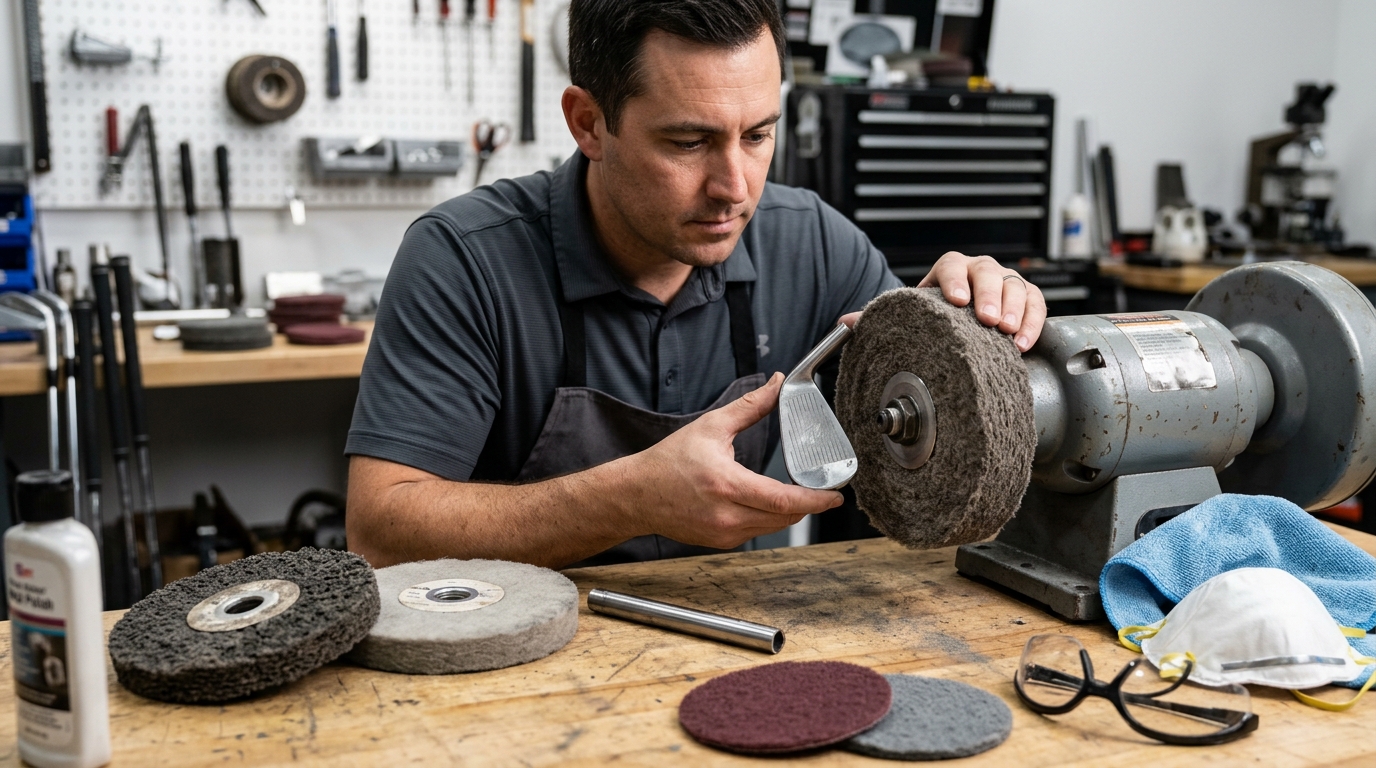
Deburring wheel density guide decisions matter because the wrong wheel can either do nothing useful or remove metal too aggressively from an iron or wedge. A fine wheel can create a clean satin finish, while a coarse or hard wheel can quickly round edges, change sole geometry, or make a repair harder to control. For […]
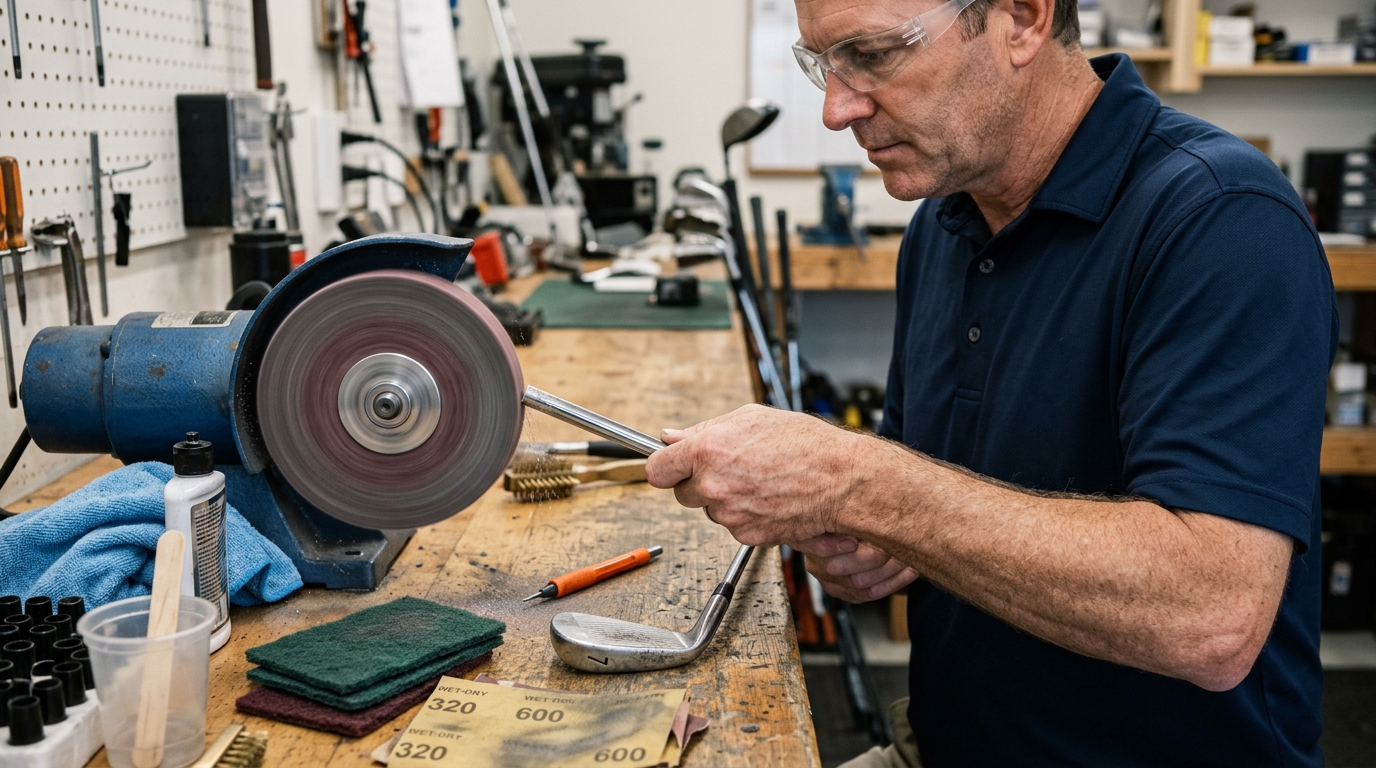
Deburring wheel for golf clubs is a small shop tool that can make DIY club building look much more professional. Sandpaper can work, but a dedicated deburring or finishing wheel gives smoother, more even edge cleanup on steel shafts, iron soles, ferrule areas, and restoration prep when used correctly. A deburring wheel is often described […]
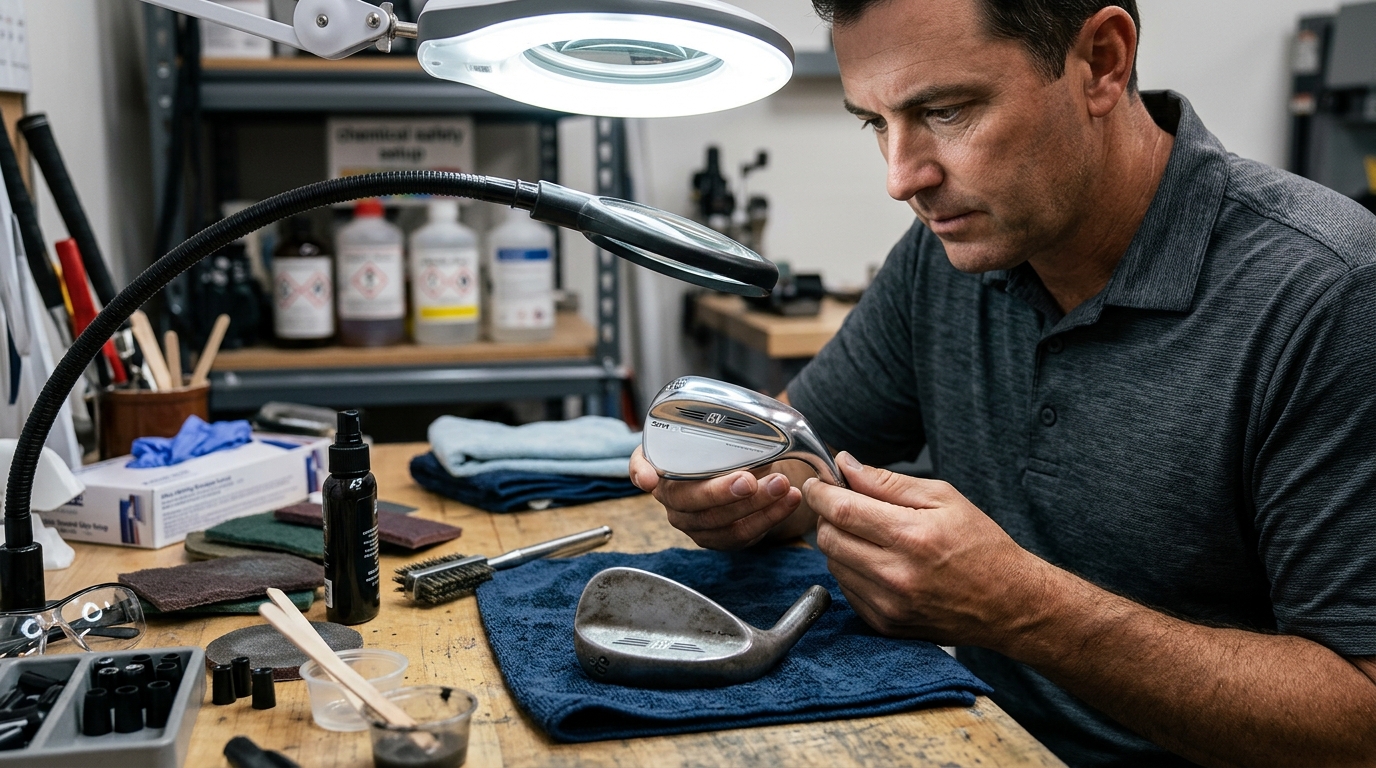
Golf iron headweights for frequency matching matter because a perfectly built iron set should not feel like seven different clubs with seven different personalities. Each iron should progress smoothly in length, headweight, swingweight, and shaft frequency so the golfer feels the same timing pattern from long iron to scoring iron. Frequency matching uses CPM, or […]
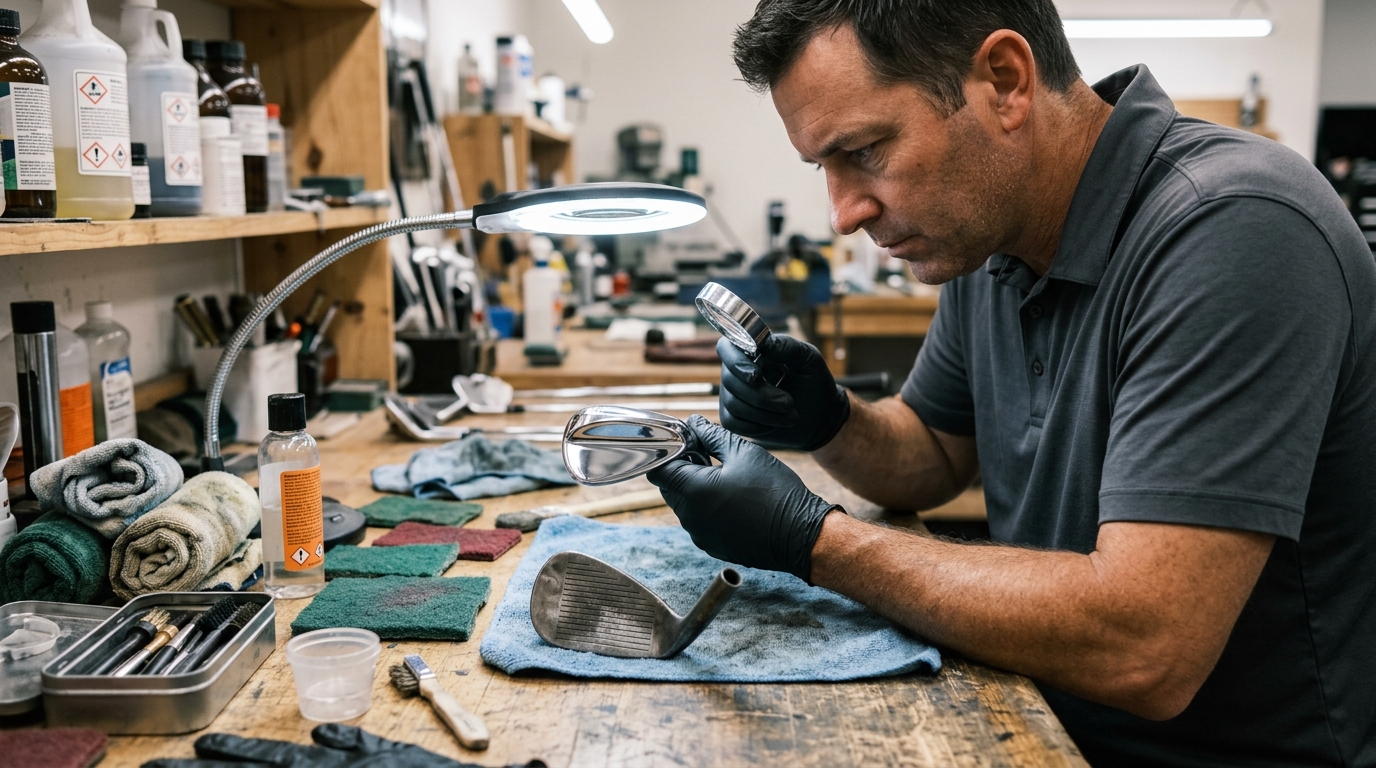
Golf iron headweight to change frequency is one of the most misunderstood parts of club building because the relationship is real, but it is not a simple magic number. Adding headweight usually makes a shaft measure and feel slightly softer, while removing headweight usually makes the shaft measure and feel slightly firmer. Frequency matching measures […]
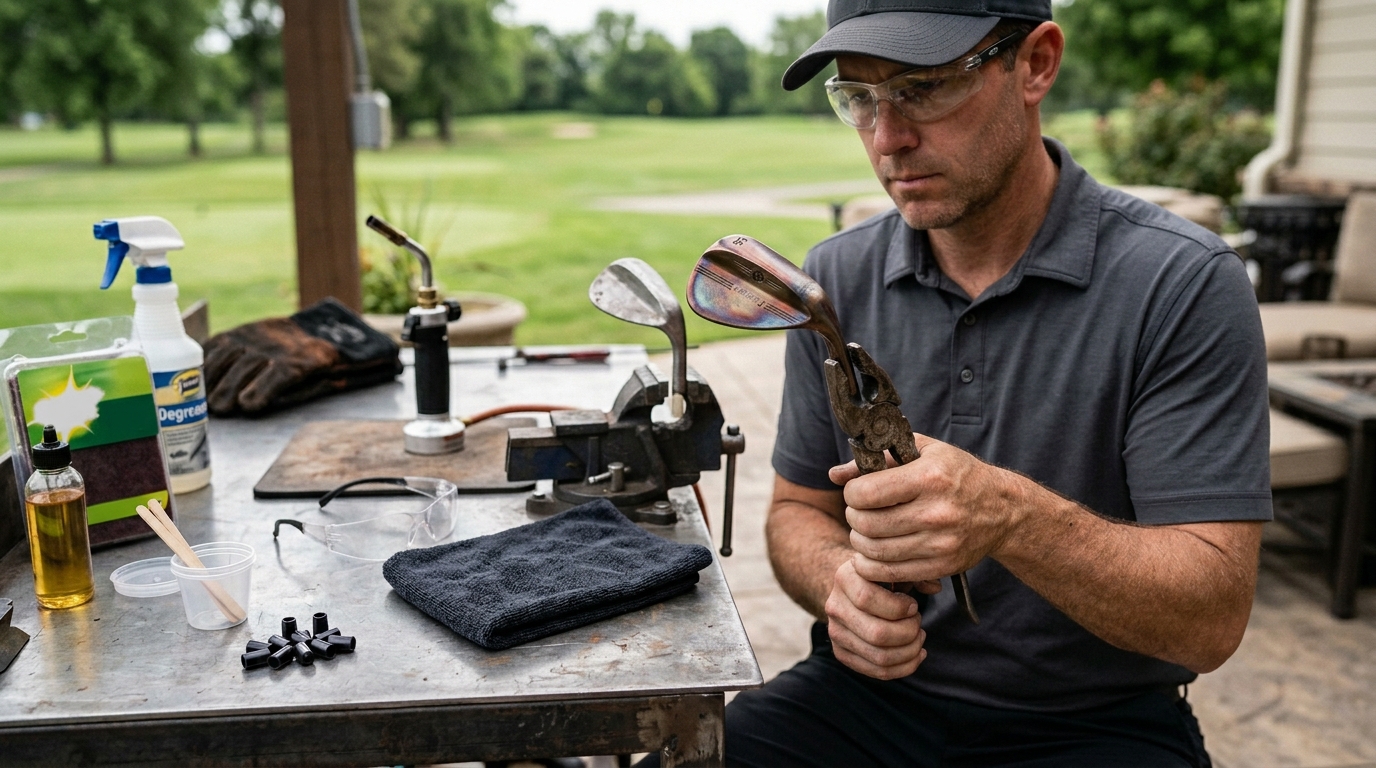
How to remove chrome finish from golf clubs is one of the hidden problems behind many DIY wedge and iron customization projects. Golfers see oil-can wedges, torch finishes, black oxide heads, and raw patina projects online, but they often miss the first step: factory chrome has to be removed before raw carbon steel can react […]
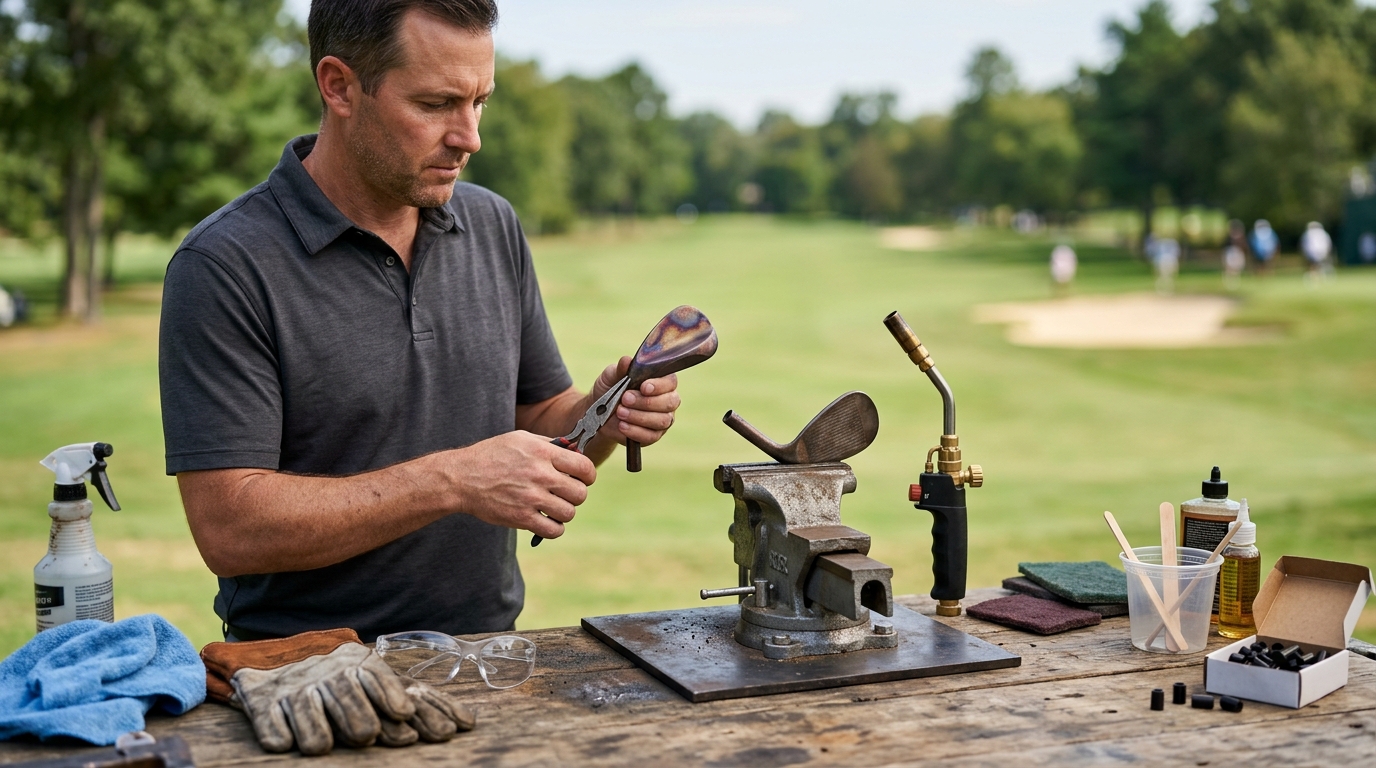
PVD finish golf clubs are popular because they give irons, wedges, and putters a darker, cleaner, low-glare look without the high-maintenance feel of a raw finish. But not every black golf club finish lasts the same way. Some black finishes look amazing out of the box and wear quickly on the sole. Some finishes hold […]
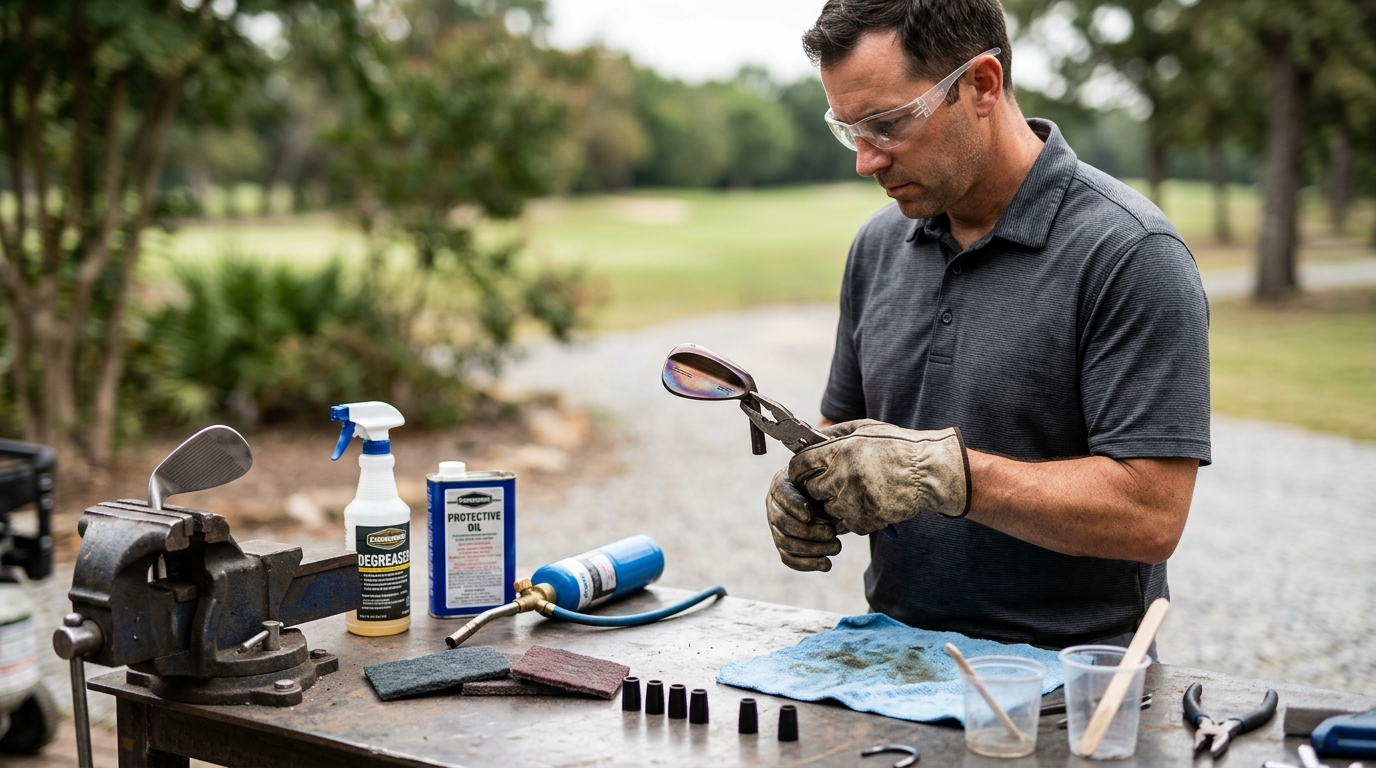
How to oil can finish a golf club is one of the most popular DIY wedge customization projects because it can turn a plain raw carbon steel wedge into a darker, warmer, tour-style head with bronze, plum, blue, straw, or smoky oil-can tones. This is not a beginner project for every club. An oil can […]
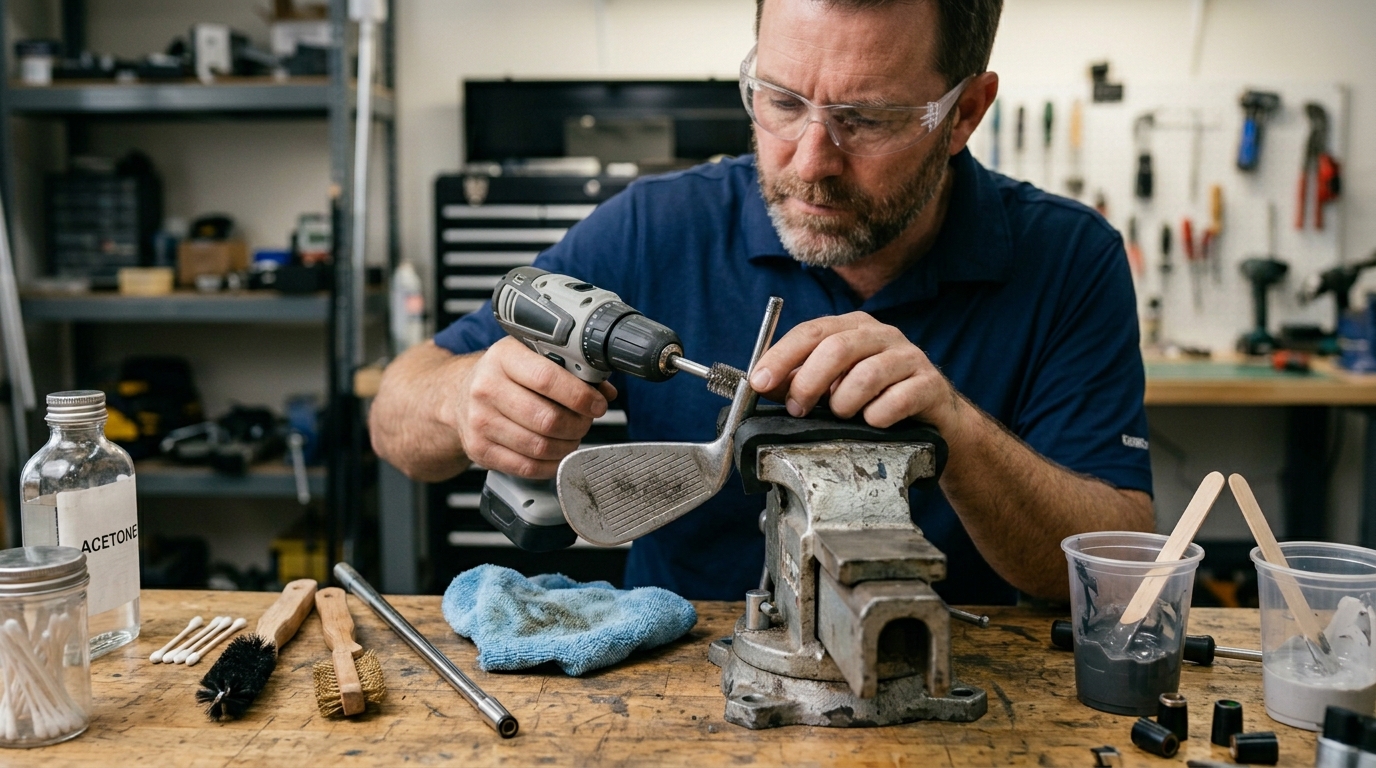
Hosel brush size guide questions usually come from DIY club builders who are ready to clean out old epoxy, but are not sure which wire brush will actually fit their driver, fairway wood, iron, wedge, or shaft adaptor. Choosing the wrong hosel cleaning brush can create two problems. If the brush is too small, it […]